Financial services play a crucial role in everyday life, requiring expert-level support to meet highly personalized user needs across domains like banking, insurance, and taxation. The emergence of foundation models, especially large language models (LLMs), has introduced new capabilities in communication, reasoning, and personalization that align well with financial decision-making processes. Recently, agentic AI has extended these models by enabling them to autonomously plan, reason, and act across multi-step tasks, making them highly suitable for complex use cases such as financial advising and compliance.
Co-located with AAAI’26, this workshop aims to bring together researchers and practitioners to explore the latest advances in agentic AI for a wide range of financial services, fostering discussions and new ideas on design, deployment, ethics, and real-world impact.
Call for Papers
Contact us at: agenticai4fs@gmail.com
This workshop encourages submissions of innovative solutions for a broad range of problems in finance. Topics of interest include but are not limited to the following:
- Research, implementation, or deployment of agentic AI in financial decision-making
- Multi-agent systems for market/user simulation and trading
- Foundation models for banking, trading, and other financial services
- Explainability and trust in financial AI agents
- Agentic AI for regulatory compliance and auditing
- Conversational financial agents and advisors
- Autonomous document processing and financial knowledge extraction
- Risk management with agentic AI, e.g., fraud detection and credit assessment
- Agentic workflows/architectures in financing platforms
- Ethical and policy aspects of agentic AI in finance
Accepted submission formats include the following:
- Long Papers: 5-7 pages of main content, plus unlimited pages for references followed by appendices (if any).
- Short Papers, Extended Abstract, and Lightening Talks: No more than 4 pages of main content, plus unlimited pages for references followed by appendices (if any).
All submissions should adhere to the AAAI’26 formatting guidelines and will undergo a peer review process. Detailed submission instructions will be provided soon.
Accepted papers will be presented as posters during the workshop and archived on OpenReview for public access (without proceedings). A small number of accepted papers will be selected to be presented as contributed talks. We also welcome submissions of unpublished papers, including those that are submitted/accepted to other venues if that other venue allows so.
Submission site: https://openreview.net/group?id=AAAI.org/2026/Workshop/AI-4-Finance
Any questions may be directed to the workshop e-mail address: agenticai4fs@gmail.com
Key Dates
Workshop Paper Submission Due Date:
22 Oct 2025 (AoE)
Notification of Paper Acceptance:
28 Nov 2025 (AoE)
AAAI'26 Workshops: 26 Jan 2026 (SGT)
At least one author of each accepted paper *must* travel to the AAAI venue in person, and multiple submissions of the same paper to other AAAI workshops are forbidden.
Detailed Workshop Schedule
| AAAI'26 Workshop on Agentic AI in Financial Services | |
|---|---|
| Time (26 Jan) | Session |
| 8:30-9:00 | Poster Setup and Opening Address |
| 9:00-9:30 | Keynote: Dr. Feng Liu, The University of Melbourne |
| 9:30-10:00 | Oral Presentation Session 1 |
| (1.1) FinZero: Launching Multi-modal Financial Time Series Forecasting with Large Reasoning Model | |
| (1.2) When Hallucination Costs Millions: Benchmarking AI Agents in High-Stakes Adversarial Financial Markets | |
| (1.3) Structured Debate Improves Corporate Credit Reasoning in Financial AI | |
| 10:00-10:30 | Keynote: Hariharan Suresh, Nvidia |
| 10:30-11:30 | Poster Viewing & Social |
| 11:30-12:00 | Keynote: Dr. Guansong Pang, Singapore Management University |
| 12:00-12:30 | Oral Presentation Session 2 |
| (2.1) FinOps Agent - A Use-Case for IT Infrastructure and Cost Optimization | |
| (2.2) Emergent Bias and Fairness in Multi-Agent Decision Systems | |
| (2.3) VeritasFi: An Adaptable, Multi-tiered RAG Framework for Multi-modal Financial Question Answering | |
| 12:30-12:40 | Closing Remark and Awards |
Keynote Speakers
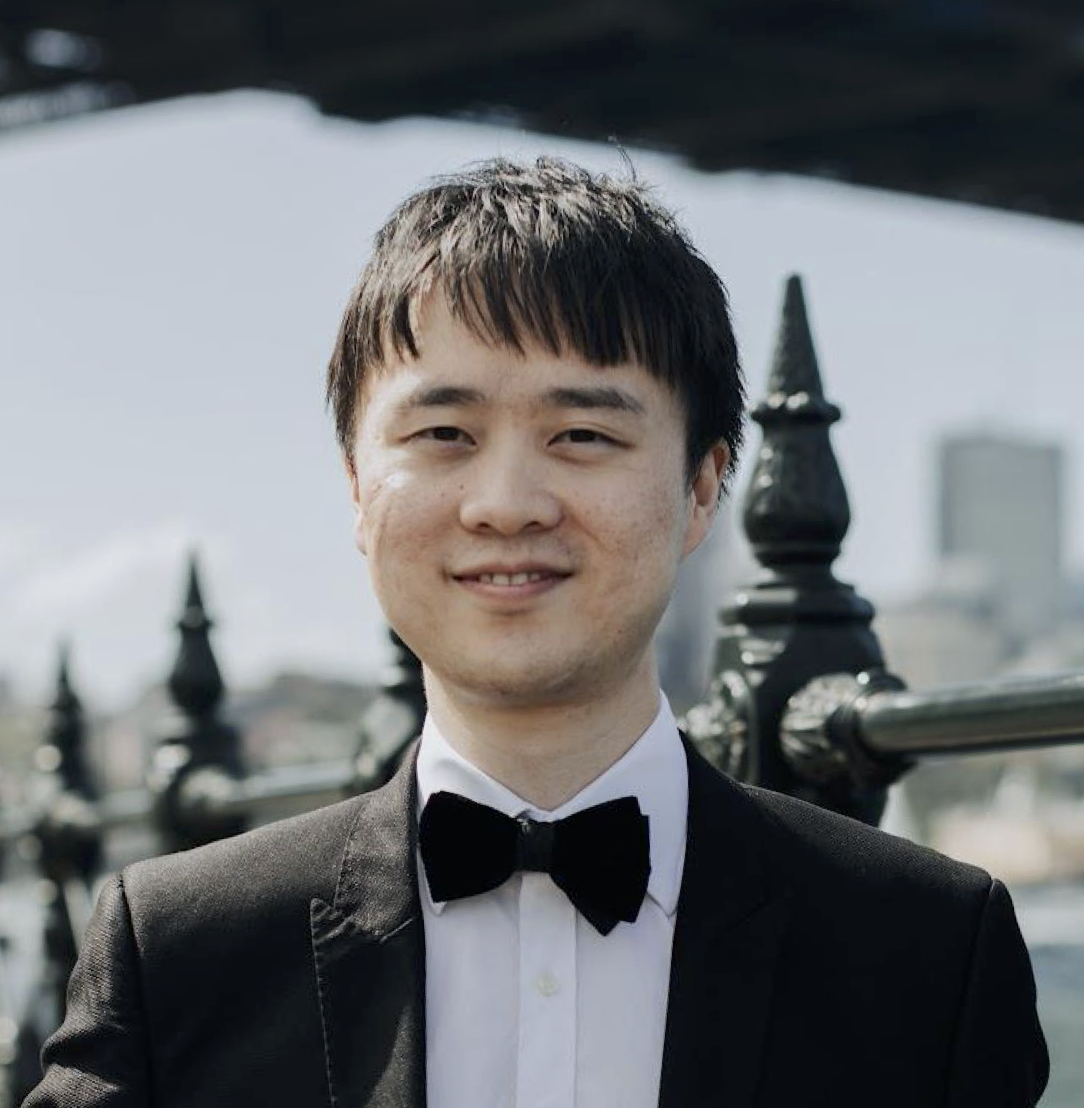
Neural Network Reprogrammability: A Unified Framework for Parameter-Efficient Foundation Model Adaptation
"Knowledge shouldn’t be limited to those who can pay," said Robert C. May, chair of UC's Academic Senate. In machine learning, this is particularly relevant, as recent foundation models—pre-trained on massive datasets—have widened the gap between those who can afford to access and control these models and those who cannot. While these models hold promise for global challenges like healthcare and education, their size and cost make fine-tuning prohibitive, especially for institutions in developing regions. Model reprogramming offers a cost-effective solution by repurposing pre-trained models without expensive retraining. This talk will introduce model reprogramming and its broader concept: Neural Network Reprogrammability, to unify model reprogramming, prompt learning, prompt instruction, in-context learning and chain-of-thought under the same framework.
Bio
Dr Feng Liu is a machine learning researcher with research interests in statistical trustworthy machine learning. Currently, he is the recipient of the ARC DECRA Fellowship, a Senior Lecturer (US Associate Professor) at The University of Melbourne, Australia, and a Visiting Scientist at RIKEN-AIP, Japan. He has served as an Area Chair for AISTATS, ICLR, ICML, NeurIPS, as a senior program committee (SPC) member for AAAI, IJCAI. He has received the Australasian AI Emerging Research Award from the Australian Computer Society, the Early Career Researcher Award from the Australian Pattern Recognition Society, the Discovery Early Career Researcher Award from the Australian Research Council, the Outstanding Paper Award from NeurIPS 2022, the Best Paper Award from AAAI 2025 Workshop CoLoRAI, the Best Student Paper Award from FUZZ-IEEE 2019, and the Best Paper Runner-up Award from ECIS 2023.
Generalist Anomaly Detection in Financial Networks
Graph anomaly detection (GAD) is one of the main techniques for identifying abnormal activities in financial networks. While numerous GAD methods have been introduced over the years, they are based on a one-model-for-one-dataset paradigm, training one detection model on each target dataset individually. These methods require availability of large training data and skillful model training on each dataset, and even worse, the resulting models often cannot generalize beyond the training distribution. Thus, they become infeasible in high-stake domains such as finance where large-scale training on the target dataset may not be possible due to issues such as data privacy and costly data annotation. This calls for generalist models for GAD, i.e., to train one single GAD model that can generalize to detect anomalies in diverse datasets. Current graph foundation models (GFMs) have achieved remarkable success in different graph tasks but struggle to generalize to the GAD task. This limitation arises from their difficulty in learning generalized knowledge for capturing the inherently infrequent, irregular, and heterogeneous abnormality patterns in graphs from different applications. This talk will introduce some of our recent efforts that build generalist GAD models for generalized detection across datasets and domains under zero-shot or few-shot settings.
Bio
Prof. Guansong Pang is a tenure-track Assistant Professor of Computer Science and Lee Kong Chian Fellow at the School of Computing and Information Systems, Singapore Management University (SMU), where he leads the Machine Learning & Applications (MaLA) Lab. He is also a faculty member of Centre on Security, Mobile Applications and Cryptography. He was a Research Fellow with the Australian Institute for Machine Learning (AIML), University of Adelaide, Australia. Before joining AIML, he received his Ph.D. at University of Technology Sydney (UTS), Australia. His research interests include machine learning, data mining, and computer vision, with a research theme focused on recognizing and generalizing to abnormal, unknown, or unseen data for creating trustworthy AI systems. His research has attracted 11,000+ citations and received multiple global recognition/awards, e.g., the prestigious 2020 UTS Chancellor's Award List, the World's Top 2% Scientists in 2022-2025 (the single-year or career-long category), DSAA 2023 Best Paper Award (Applications Track), and Most Influential KDD 2023 Paper. He has been organizing a series of workshops and tutorials on anomaly and novelty detection at various conferences such as KDD, CVPR, ICCV, IJCAI, and AAAI. He serves as Area Chair of NeurIPS, ICLR, ICML, CVPR, KDD, PAKDD, IJCAI and AAAI (Senior PC), Associate Editor of IEEE Transactions on Neural Networks and Learning Systems (TNNLS) and Pattern Recognition, and Editorial Board Member of IEEE Intelligent Systems and International Journal of Data Science and Analytics.

Build Autonomous and Collaborative Financial Agents using NVIDIA's Agentic AI Stack
Financial services are entering a new era where autonomous agents make intelligent decisions, adapt to market conditions, and operate within strict governance frameworks. This session explores how NVIDIA's open-source agentic AI ecosystem enables developers to build production-ready autonomous systems for financial services. We'll journey through the complete lifecycle of agentic AI in finance, from model selection through Nemotron family to specialized agent development. The session covers four critical dimensions: autonomous decision-making, compliance and governance through explainable systems, multi-agent orchestration, and intelligent data integration and knowledge graphs.
Bio
Hariharan Suresh is a Senior Cloud and Generative AI Technologist at NVIDIA. He collaborates with Asia Pacific developer teams to build innovative AI solutions using NVIDIA Tech and SDKs to solve complex business problems. With over 15 years of experience, he headed software engineering and NLP/AI teams. He is passionate about enabling organizations to scale their businesses with deep learning, Agentic AI, Generative AI, Machine Learning, and Solution design powered by accelerated computing.
Before joining NVIDIA, Hariharan worked as an AWS trusted adviser and Thought leader for ASEAN enterprise/ISV development teams. He advises CXOs on product market fit, latest AI innovations, scale, and relevance. He has extensive BackOffice implementation experience with commercial banks. He completed his Masters in Information Systems from Nanyang Technological University in Singapore.
Accepted Oral Papers
| Paper ID | Title | Author Info |
|---|---|---|
| 1 | FinZero: Launching Multi-modal Financial Time Series Forecasting with Large Reasoning Model | Yanlong Wang (Tsinghua University), Jian Xu (Huawei Technologies Ltd.), Fei Ma (Guangdong Laboratory of Artificial Intelligence and Digital Economy (SZ)), Hongkang Zhang (Tsinghua University), Hang Yu (Ant Group), Tiantian Gao (Tsinghua University), Wang Yu (Southern University of Science and Technology), Haochen You (Columbia University), Shao-Lun Huang (Tsinghua University), Danny Dongning Sun (Peng Cheng Lab), Xiao-Ping Zhang (Tsinghua University) |
| 2 | When Hallucination Costs Millions: Benchmarking AI Agents in High-Stakes Adversarial Financial Markets | Zeshi Dai (Cybertinolab.inc), Zimo Peng (University of California, San Diego), Zerui Cheng (Princeton University), Ryan Yihe Li (Cybertino Inc) |
| 26 | Structured Debate Improves Corporate Credit Reasoning in Financial AI | Yoonjin Lee (Seoul National University), Munhee Kim (Openmade Consulting), Hanbi Choi (Seoul City University), Juhyeon PARK (LG CNS), Seungho Lyoo (Honest AI Co., LTD.), Woojin Park (Seoul National University) |
| 32 | FinOps Agent - A Use-Case for IT Infrastructure and Cost Optimization | Ngoc Phuoc An Vo, MANISH KESARWANI, Ruchi Mahindru (International Business Machines), Chandrasekhar Narayanaswami (IBM Research) |
| 43 | Emergent Bias and Fairness in Multi-Agent Decision Systems | Maeve Madigan (VISA), Parameswaran Kamalaruban (VISA), Glenn Moynihan (VISA), Tom Kempton (University of Manchester), David Sutton (VISA), Stuart Burrell (Visa Inc.) |
| 44 | VeritasFi: An Adaptable, Multi-tiered RAG Framework for Multi-modal Financial Question Answering | Zhenghan Tai (University of Toronto) , Hanwei Wu (McMaster University), Qingchen Hu (McGill University), Jijun Chi (University of Toronto), Hailin He (TFSWUFE), Lei Ding (University of Manitoba), Tung Sum Thomas Kwok (University of California, Los Angeles), Bohuai Xiao (Shenzhen University), Yuchen Hua (McGill University), Suyuchen Wang (University of Montreal), Peng Lu (University of Montreal), Muzhi Li (The Chinese University of Hong Kong), Yihong Wu (University of Montreal), Liheng Ma (Mila - Quebec AI Institute), Jerry Huang (Montreal Institute for Learning Algorithms, University of Montreal), Jiayi Zhang (Hong Kong University of Science and Technology), Gonghao Zhang (Flab), Chaolong Jiang (Mianyang Teachers' College), Jingrui Tian (University of California, Los Angeles), Sicheng Lyu (McGill University), Zeyu Li (Nanyang Technological University), Boyu Han (Stanford University), Fengran Mo (University of Montreal), Xinyue Yu (University of Montreal), Yufei Cui (McGill University), Ling Zhou (CG Matrix Technology Limited), Xinyu Wang (McGill University) |
Accepted Posters
| Paper ID | Title | Author Info |
|---|---|---|
| 3 | ViG-LLM: Enhancing Visual Grounding Capabilities in Closed-Box LLMs for Document Information Extraction without OCR Dependencies | Sudhanshu Bhoi (Amazon) |
| 6 | Multiagent Reinforcement Learning for Liquidity in Bond Markets | Alicia Vidler (Bar-Ilan University), Gal Kaminka (Bar-Ilan University) |
| 7 | Code Execution Improves Financial Reasoning: Benchmarking Modern Agentic Systems on Financial QA | Ayush Nangia (Lossfunk), Aman Gokrani (Xsolla), Ananya Tomar (Manipal University) |
| 11 | A Multi-Agent Framework for Portfolio Management Analytics in Quantitative Finance | Sayani Kundu, Dushyant Sahoo (J.P. Morgan Chase), Victor Li, Jennifer Rabowsky, Amit Varshney (J.P. Morgan Chase) |
| 14 | LendNova: Towards Automated Credit Risk Assessment with Language Models | Kiarash Shamsi (University of Manitoba), Danijel Novokmet (University of Split), Joshua Peters (Wilfrid Laurier University), Mao Lin Liu (Wealthsimple), Paul K Edwards (Wealthsimple), Vahab Khoshdel (University of Manitoba) |
| 18 | Multi-Agent Examiner: Evaluating Small Language Models on Financial Tasks | Sai Akhil Puranam (Ernst & Young LLP), Sridhar Dasaratha, Karmvir Singh Phogat, Chetan Harsha, Shashishekar Ramakrishna |
| 25 | Hierarchical Reranking for Scalable Financial RAG System | Joohyun Lee (Financial Security Institute), Minji Roh |
| 27 | Cash Flow Underwriting with Bank Transaction Data: Advancing MSME Financial Inclusion in Malaysia | Chun Chet Ng (AI Lens), Low Wei Zeng (Ai Lens Sdn Bhd), Jia Yu Lim (Universiti Malaya), Boon Yin Yin (AI LENS) |
| 31 | AGORA-F: An Agentic, Gradient-Orchestrated Multi-Agent Architecture for Financial Decision-Making | Kushagra Mutreja (Kalinga Institute of Industrial Technology (KIIT)), Aditya Singh (Kalinga Institute of Industrial Technology (KIIT)), Murari Mandal (Kalinga Institute of Industrial Technology (KIIT)) |
| 33 | VERAFI: Verified Agentic Financial Intelligence through Neurosymbolic Policy Generation | Adewale Akinfaderin, Shreyas Subramanian (Amazon) |
| 34 | CausalGraphX: A Counterfactual Graph Neural Network Framework for Explainable Systemic Risk Assessment | Rabimba Karanjai (PayPal Inc.), Hemanth Madhavarao, Lei Xu, Weidong Shi (University of Houston) |
| 37 | DAO-AI: Evaluating Collective Decision-Making through Agentic AI in Decentralized Governance | Chunghyun Han (Columbia University), Alfio Gliozzo, Junkyu Lee (International Business Machines), Agostino Capponi |
| 47 | Fin-Agent-QG: A Collaborative Multi-Agent Framework for Higher-Order Cognitive and Difficulty-Aware Financial Exam Question Generation | Xuan Yao (National University of Singapore), Zhou Yi (National University of Singapore), Qu Xiaoyu (National University of Singapore), Lyu Lulin (National University of Singapore), Zhang Zefan (Nanyang Technological University), Wong Zhi Heng Zac (National University of Singapore), Ke-Wei Huang (National University of Singapore) |
| 54 | ArgBoost: Interpretable Multi-Agent Reasoning for Directional Cryptocurrency Price Forecasting | Seungju Lee (Seoul National University), Seongwan Park (Seoul National University), Geonwoo Shin (Seoul National University), Woojin Jeong (Seoul National University), Jaewook Lee |
| 57 | Polyculture Agents: Detecting and Mitigating Algorithmic Echo Chambers in Financial AI Workflows | David Scott Lewis (AIXC), Anar Batkhuu, Enrique Zueco (Ai Executive Consulting) |
| 58 | FinForge: A Semi-Synthetic Benchmark Generation Framework for Finance | Glenn Matlin (Georgia Institute of Technology), Akhil Theerthala (Perfios Software Solutions), Anant Gupta (Georgia Institute of Technology), Anirudh JM (Georgia Institute of Technology), Rayan Castilla (Georgia Institute of Technology), Yi Mei Ng (Georgia Institute of Technology), Sudheer Chava (Georgia Institute of Technology) |
Organization Committee
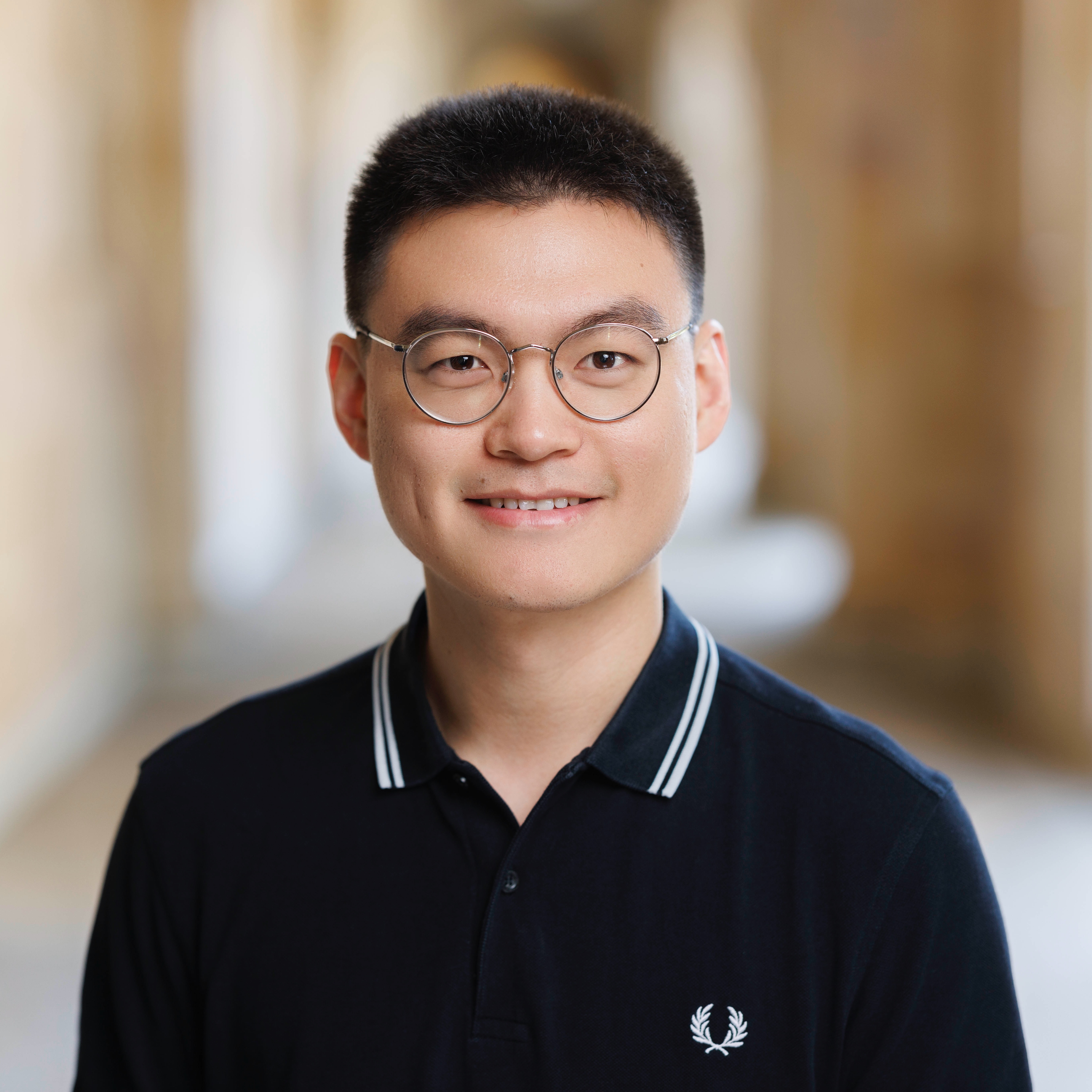
Rocky (Tong) Chen
The University of Queensland

Hongxu Chen
Commonwealth Bank of Australia

Joel Mackenzie
The University of Queensland

Fengbin Zhu
National University of Singapore

Luiz Pizzato
Commonwealth Bank of Australia

Ritchie Ng
Commonwealth Bank of Australia

Anna Leontjeva
Commonwealth Bank of Australia